Thanks to everyone who entered the contest. One of our long time followers, Vangie, from Tokoyo had the 5th entry that was the correct answer - the angel was sitting next to a big clump of chives. I didn't expect anyone to recognize the variety, but for those who asked, it is '
Grolau,' a commercial and robust variety from
Richters. Vangie's Valentine box was mailed to her mother who lives in Arkansas.
Here's what the garden looks like today (above). And yesterday. And the day before. All week it's been frozen. It all looks pretty bleak.
 |
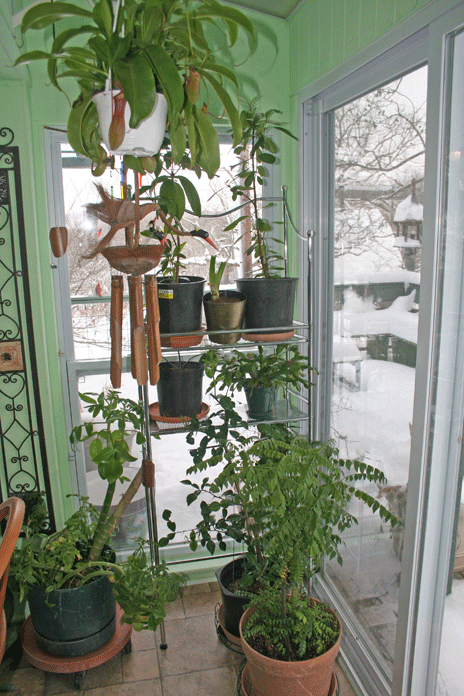
| Some of the plants I'm growing: Allspice, Cinnamon, Kaffir Lime, Curry Tree and others. |
But if I step back just a few feet from that view, here's what I can see, so I thought I'd write about some of the indoor plants I grow. I'm working on my Keynote presentation on Cutting Edge Plants that I'll be presenting to the Michigan Herb Associates conference in Michigan next month and will use some of the photos of the plants you see here.
 |
| Dancing Tea Plant (Codariocalys motorius X Ohashi leguminosae) |
Some of the plants I grow are rather hard to come by, such as the
Udorn Dancing Tea, above. This plant is known for its ability to move when sound is nearby. If you search YouTube for the words,
"Dancing Tea" you'll find videos of a dancing tea with a radio nearby playing music. The top leaflets of the plant, "dance" in motion with music (or speaking). It's a medicinal tea plant from Thailand and is not the happiest of plants indoors but so far is hanging on. It likes part shade in the herb bed in summer.
 |
| This is an unusual bush variety of Piper nigrum from Thailand. Most black peppers are vines. |
 |
| The black pepper plant has pepper berries about to start ripening. Yes, the same peppercorns you use when you sprinkle black pepper on your breakfast eggs. |
 |
| True Curry Tree (Murraya koenigii) is used in Indian cooking and usually fried in hot oil. |
I learned to appreciate the curry tree when I was in India a few years ago. It's essential to many Indian dishes.
 |
| Leaves of Kaffir Lime (Citrus hystrix) are used in cooking. |
Kaffir lime isn't especially rare but it's also not a common houseplant. It will accept regular pruning and you can freeze the leaves for use later, although the fresh ones are best. I learned to use kaffir lime leaves in both cooked and uncooked dishes when at the Bopai Cooking School in Bangkok.
 |
| Allspice and Lemon Bay Rum |
The allspice and bay rum will grow into small trees, about the size of a small redbud tree or a large lilac bush but I keep mine pruned to indoor size. In the summer they go outdoors on the deck. I like to crush the leaves and season dishes, especially desserts or whipped cream.
 |
| Culantro (Eryngium foetidum), also known as Vietnamese Coriander |
You'll find the leaves of
culantro next to a dish of pho in a Vietnamese restaurant. The plant is native to the Americas but it has found its way into many Asian countries' cuisines. It requires constant moisture from underneath and heavy shade. It's a biennial and you can see the seed clusters at the top so I'll save seed and replant. If you like cilantro, you will also like culantro, and like cilantro, is used fresh, not cooked.
There are quite a few more plants in another plant window, cinnamon, Okinawa spinach, lemongrass, and others, but you might find these interesting:
 |
| I brought this Pin Cushion Plant (Nertera granadensi) back from Florida. |
 |
| Money Tree (Pachira aquatica), once the source of paper for currency in Asian countries. |
Every time I write about tropical or indoor plants in my newspaper columns I receive questions about keeping them insect free. Here's what I use, which is a kind of super fine oil spray. I take my plants outdoors about once a month and spray them all, stems, leaves, tops of soil and edges of plants, with the oil spray at the rate recommended on the label. The oil isn't toxic to humans or pets, is approved for organic uses, and simply smothers the insects and their eggs, including: white fly, scale insect, red spider and mealy bugs.
It's only available in quarts and will make about 12 gallons of spray (as I recall). There are 2 mail order sources that I know of:
http://www.pestproducts.com/ultrafine.htm and
Green Island Distributors.
Nearly all of my plants are seasoning or food plants, although the Money Tree and Pincushion Plants aren't. Here's one more, that as far as I know isn't edible, although it does eat other things itself, like flies and gnats.
 |
| This is in the Nepenthaceae plant family. The little pitchers should be kept half full of water to help attract insects. |
So while the snow melts, I'm looking indoors at the greenery and life that will eventually move outdoors. I'm glad there are people who like snow and winter. White has never been a favorite color and falling down and sliding down the driveway on my backside has never been a favorite activity, either. Happy gardening!