11/30/2009

Pears, Crows & Chili

I know it's a stretch to connect the above photo to the garden, but this newspaper clipping is just too good not to share. I guess the connection is: peppers come from the garden; peppers go into chili seasoning; chili seasoning goes into the chili cook-0ff. There, that's the only connection I can think of for garden. But you have to admit, both captions make this funnier than the newspaper probably intended. It is, indeed, a large crowd, but I don't see how it does anything to help hungry children.

We've had lots of crows in the orchard every day for the past couple of months. I really get a kick out of watching them. I start the day nearly every morning, soaking in the hot tub out on the deck. Being in the hot tub is a bit like being in a duck hunting blind because the birds don't recognize me as human nor a threat and basically don't even notice that I'm watching them.

Every morning one crow, which I dubbed the Advance Guard, flies to the power line above the orchard, near the old pear tree, and looks around. If there's no danger about, he gives 4 short and one long caaaaw. Within seconds 3 or 4 more crows fly to the ground and hop over to the pear tree. There are still fallen pears beneath it and they like the pears as much as we do. They'll eat for awhile, sometimes calling in their friends, then Molly will give chase and they'll fly on to other pursuits.

Josh has been gathering pears and cooking them down into pearsauce, just like applesauce, since early September. He's canned quite a bit, frozen some, and has dried several bags of pear slices in the dehydrator. We've gladly shared the pears with the crows. They're great clowns and I really like watching them. And over time I've come to recognize some of their different calls.

In very early morning, the crows leave their rook, their night roosting area. The crows that have the job of Advance Guard go in different directions, about a quarter to half mile apart, and report. If one gets distracted and doesn't answer the "report in" call, one of the others comes and checks on him, and gives him a tongue-lashing for being negligent. They have particular calls for when there's food; calls for just having landed somewhere to look around, and especially a different call when they spot an owl. From my vantage in the hot tub each morning, I have come to recognize and enjoy their many calls they use to communicate.

I found these great natural stone nail files that we're selling with our Nail Fungus Soak. It's the same kind of mineral stone that's used for sharpening knives. The files are 5 different grits, designated by color, from very fine to coarse, with one large one for smoothing calluses and heels. (The files aren't even on our website yet, you have to call). The great thing about the files is you can sterilize them. (The fastest way to spread nail fungus from one nail to the other, or one person to another, is by the use of trimmers and nail files that are already infected). Dunk them in rubbing alcohol once a week and you're safe. Natural stone files last for years! And, yes, my Herbal Nail Fungus Soak is all natural, made with herbs, and works. I guarantee it!

You probably already know I've been making and selling my formula Nail Fungus Soak for almost 18 years now and have lots of happy customers who've gotten rid of their cracking heel and nail fungus. Most anyone who digs in the soil or gets a nail injured, will get nail fungus. Oddly enough, some doctors still believe the only remedy is to kill and remove the nail. I certainly wouldn't want to go to a doctor who did that if I had a broken arm! Imagine, removing either one as a "cure." Nail Soak does a great job on athlete's foot a the various kinds of nail fungus. We sell through lots of chiropractors, podiatrists, pharmacies, some doctors, lots of natural foods stores and the amazing Amish Country Store in Branson. We also have a helpful Questions & Answers page, which includes comments from our customers and tips on dealing with nail problems.

Our good friend, George Hudson, drew this caricature of me and it pretty much describes the past several days. I hope your week is going well, and you've recovered from Thanksgiving.

Happy gardening!

11/22/2009

Ghost Towns, Calico Rock


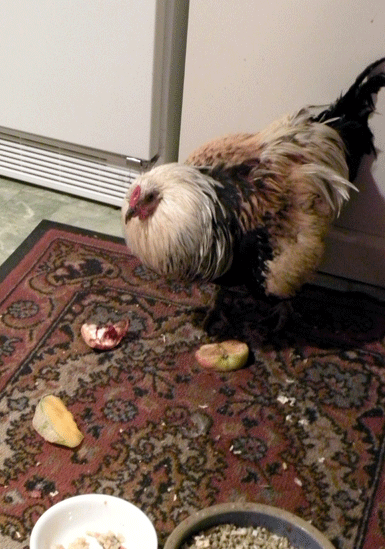
Jenny, who's our friends, George and Pat's favorite chicken, was agitated and upset at the news of Mr. X this week, as you can tell by the video. Rosalind Creasy responded to my post about Mr. X and set the record straight. Here's the update:
"Thanks Jim, I enjoyed your link, though Robert drove Mr. X from coast to coast, and he spent a lot more time in nursing homes, school classrooms, and in front of garden club audiences than he did on TV. I have had him cremated and am going to scatter his ashes over Robert's grave next summer. My cats are under my roses, however."

I took a drive down to Mountain View, AR yesterday to see friends and pick up some trees for our front yard where I had a tree cut down last week. I bought a 12 ft. white dogwood, an Autumn Glory maple and a Savannah holly. I picked a few bitter oranges (Poncirus trifolium) in a friend's yard. These golf ball sized oranges are bitter and not really edible, but have a nice fragrance. If you don't know the plant and want an unpenetratable hedge, this is the plant. With 3 inch thorns, and a little dab of something on the tips that hurts like the dickens if you get pricked, this is one mean plant. I had one once that reached about 12 ft. tall and even after I'd cut it down, the left over dead thorns still could cause intense pain when picked up. It's almost worth growing this tenacious plant, however, just for the fragrance of the orange blossoms in the spring. And it's plenty hardy to zero or below.

I also photographed some sumac. I've written about this plant here before. It's used as a seasoning herb in many Middle Eastern countries. Here in the Ozarks we simply boil it, add some sugar and coriander seed and serve it hot as a tea, or over ice.

Rather than retrace my tracks, I drove north from Mountain View to Calico Rock. This is a great little town situated on top of bluffs that overlook the White River, with still operating railroad tracks that follow along the river. Calico Rock is named for the miles of moss and lichen-covered sandstone flats around and beyond the town. Just driving along the roadway you can spot 1 to 2 acre-sized patches of flat rock outcropping and every square inch of the stone is covered with moss and lichens. There must be dozens of kinds growing there and what's fascinating is there's so much life in the moss. It's actually like a miniature world, the closer you look at the moss and lichen colonies, the more activity and life you notice there. An entire world that operates separate from and independent of, you, me, anyone.

In the town of Calico Rock (which is known for it's tourist fishing economy in summer) there is a ghost town called, Peppersauce Ghost Town. As many times as I've been to Calico Rock, I had never known there was an old town just across the creek. Lots of 1800s vintage buildings, setting empty. There's a jail that is about the size of my closet, made of stone with tiny holes for the prisoners to peek out of. Mostly it housed drunks, I understand. The name, Peppersauce, was the local's name for white lightning/homebrew, which was made and sold there. It was the seedier part of town and the more respectable townsfolk didn't venture into that neighborhood, not during the daylight, at least. So I looked over Peppersauce Lane, which was the main questionable section long ago, and it led across a little bridge and into Peppersauce Alley and what is now the ghost town. Peppersauce - good name for Arkansas home brew!

Today, Josh's mother, Barbara, was out in the garden looking over the salvias and roses, still in bloom with our beautiful weather. I planted the trees I brought home from Mountain View along with a few dozen tulips. Happy gardening!

11/17/2009

The Famous Mr. X Dies

I received word yesterday from our friend, Rosalind Creasy, that the famous rooster, Mr. X, had died. He'd lived to a ripe old age of 15, a substantial yearage for a rooster, and passed away quietly in his sleep Sunday night. Our condolences to Mr. X's family and friends.

And there were many of both. Just last year we heard the details of Mr. X's birthday party, which was attended by neighbors and friends. Cathy Barash, who's assisting Ros with a new book, and staying in California currently with Ros while the book is in progress, sent photos and the menu from the big birthday party. No chicken or chicken products were served but a special menu from Ros's garden was the fare. Ros is well known for her incredible plant and garden books and calenders for the Sierra Club.

She inherited Mr. X from her husband, Robert, after he was killed in a motorcycle accident. Before that time, Mr. X, with Robert in tow, had appeared on numerous Good Morning America and Today-type shows and Robert could be seen carrying Mr. X through the airports and boarding planes for media appearances from Coast to Coast. Mr. X was a house and garden pet and had a cushy life for a rooster.

Mr. X evidently didn't bother the garden plants. I've heard that Ros maintains a very well groomed garden, which she uses it in her photography and writing business, as well as for developing recipes for many incredibly beautiful her books.

Our own rooster, which simply has the name, GET OUT OF THE GARDEN!, has been a pest all week. He has his own harem, but flies over the fence every day and picks through the beds and bugs in the garden. This coming weekend he'll get his wing feathers clipped and his flying days will be a thing of the past - until they grow out again, that is. Why not leave him in the garden? He's scraping the soil out of the beds, digging in the gravel pathways and generally making a mess of things.

We may finally get our first frost of the season tonight. Here it is, the 17th of November and we're still having lemongrass, basil, oregano, parsley and even a ripe tomato this week. The big bunch of 12 ft. high red castor beans in the chicken yard next to the garden (and which I can see from my window as I type this) are still looking lush and tropical. Winter is just over the hill, but what a grand ride it's been to have a pleasant and productive fall season after the wintery October we had. Every day without frost, freeze or snow is one day closer to spring!

The food dehydrator has been going all week. Josh has been drying pears between my pepper drying. The pears, sliced thin, dry to a nice leathery, pear-ish flavor that is sweet and make a good snack.

I'm drying peppers as fast as I can. I split them open and in some varieties, remove the seed clusters. My fingers still have that deep pepper burn from yesterday's pepper splitting process. They dry faster that way, rather than just putting the peppers in whole. It takes 2-3 days to dry them to the crisp/dry stage, when I bag them up. Then when I have a few gallon bags of peppers dried, I'll mix all 12 varieties together and grind them up in the food processor. I like the blend of flavors, from mildly hot to pure heat, and that will become pepper seasoning for winter foods. From scrambled eggs to Chinese dishes, peppers are an important component to my cooking.

Many of you may recall I take photos of unusual, silly, strange or funny signs when I travel, so here's my sign of the day. It makes you wonder, do they also rent ethics, too? Maybe sincerity?

Happy Gardening!

11/10/2009

Season Out of Sync

Blackberries in November....larkspurs blooming...fennel blossoms being feasted upon by insects, the months have gotten reversed. October was one of the coldest and wettest Octobers on record in the Ozarks. November, thus far, at least, is what September and October should have been. With highs in the 70s, sunny and mild, and as yet, no frost, we're getting the beautiful fall weather we wished for last month.

Yesterday I took this photo of a ripe blackberry. There had been more, but friends had eaten them, not even noticing that blackberries are generally over and done 2 months ago. I was glad they found them to eat while visiting! These are especially productive blackberries, hybrid thornless varieties from the University of Arkansas. They've introduced Arapaho, Navaho, Ouichita and several other thornless varieties in the past few years and the vines are enormously productive. But in all the years I've grown thornless blackberries, I've never had them produce berries in November.

The continuously chilly weather the past 2 months, with the constant, daily rains, has convinced plants like the larkspurs that are in bloom in the garden, red raspberries and blackberries, that spring must be here.

I noticed my bronze fennel plants are still blooming, also a bit out of season. Most of the leaves of the mature plants have dropped, but the stalks have blossom umbrels, and the pesky cucumber beetles are enjoying the nectar. And the assassin bug, shown here on the fennel flower, is enjoying eating the cucumber beetles. Assassin bugs are beneficial predators that feed on garden pests and they are welcome to all the cucumber beetles they can find.

People often tell me they can't tell the difference between fennel and dill. Akos, our first intern, many years ago from Hungary, worked with us in the garden for nine months and said to me one day that he didn't know the difference between the two plants. I had him smell and taste both and then he could better tell between them. I told him he could not leave Long Creek Herb Farm, not knowing the difference between those two plants because I would be ashamed to have failed him as a teacher. As you can see in the photo of the leaves, they do look similar. The one on the left is fennel, and is slightly lighter in color, while the dill, on the right, has more of a blue tint. And no, it's not true that you have to keep them separated because of the possibility of them crossing. They are two distinct plants, it's not possible for them to cross pollinate, any more than it is for a rose bush and an apple tree.

Our webmaster has been working feverishly on our new website, soon to be launched. In support of what he's doing, I have been photographing a few more products for the web pages. Chili Seasoning, Roaster Seasoning, Anne's Perfect Pumpkin Pie Spice and Teas of India, were all on today's photo menu.

Happy season, whether yours is in sync, or completely out, like ours. I won't complain about beautiful sunny days, nor blackberries in November!


11/06/2009

Normal Rockwell is to blame

I blame it all on Normal Rockwell. The barbershop where I got my haircuts as a kid had an old calendar of N. Rockwell prints and one of them was a kid and his father raking leaves, a spotted puppy playing in the leaf pile. They were smiling. They were having fun. It was what leaf raking was supposed to be.

I blame Norman on a lot of misconceptions from my childhood. Those Saturday Evening Post covers of the big family gathered around the Thanksgiving table, or the aforementioned leaf raking, or the big day at the grandparents on Christmas. I grew up believing people's families were actually like that.

Trouble is, leaf raking is a solitary duty. When the leaves fall, every year, other people are too busy, or have too much to do. Or, "tomorrow." We have several nice, big oak trees in our yard, and a couple of maples, and I'm grateful and glad for every one of them. Until the leaves fall, that is. Oak leaves are like hand sized pieces of brown cardboard and they pile up in the corners and under hard to get at places and stick themselves between the boards on the deck. If left to their own devices, after a rain or two, they pack down like those trendy Cuban pressed sandwiches, and once glued together, have to be pulled out with tongs. Nearly.

So each year I slog along, glaring at the neighbors who drive past, never stopping to help, at the UPS guy who could surely take a few measly hours out of his busy 12 hour day to help, while I stubbornly whale away at the leaves. Yes, I know how much good mulch they would make. They could fill the bottom of the pond at the lower part of the pasture and seal it up so it actually holds water. They could be put in the goat barn for bedding. The fact is, we have mountains of leaves and I have a limited amount of energy. So, with rake and the sometimes-working leaf blower in hand, I round them up into giant piles. I run over them with the lawn mower and mulch some, but it's too big a job for the mower, and in the end, I pile the leaves in the driveway and set them afire. And once burned to black ash, I track some indoors every day just to keep the memories alive. And no matter how carefully I rake and blow and puff, plenty will remain stuck in the flower beds, hiding behind the stacked flowerpots and under places they shouldn't even be able to get to.

I think it's not that I actually mind leaf raking, what I mind is Normal Rockwell having convinced me a long time ago that people came together to do the job, that it was fun, that people smiled while working. I also don't like the fact the leaves aren't green any more and the trees look bare and dead for a whole season.

We're still picking raspberries, roses and lavender, grateful for another week without frost. And the ancient, 'Brush Pile' tomatoes are still producing, as well. These tasty little tomatoes reseed themselves each year in the blackberry patch and grow up and through the berries. When the other tomatoes have quit for the year, these little berry sized tomatoes, just keep producing tiny tomatoes until a freeze finally halts their growth.

So Norman, where ever you are these days, I hope you had to put your paintbrush down and rake a few leaves. Your paintings might have turned out a lot different had you been using a rake instead of a watercolor brush and some of us would have grown up knowing leaf raking was a chore, not a community event. Good leaves to you!

10/30/2009

Easy Dips, Using Herbs

I'm pretty sure pumpkins look forward to Halloween all year. They know they'll get to dress up and look scary and remind us what wonderful characters they are. This is the pumkins favorite holiday; mine, too. There's no guilt about gift giving, no worries over fireworks or fake Christmas trees vs. real ones. Halloween is simply a time to have fun, to remember our ancestors, eat candy and put on a costume. Pumpkins do all of those things really well.

Today is Molly's 10th birthday. She celebrated the ending of her 9th year last night by saving the chickens in the barn, from a 'possum. Mr. Possum goes in at night and eats chicken food, and sometimes eats a chicken from time to time, so Molly saved the day. She'll get a special treat this evening. Maybe a homemade doggie cookie from our Doggie Cookie Kits.

This week we've been celebrating the garden in another way. Our chef friend, Eddie, and his friend, Gregg, have been visiting from California. Eddie stayed with us several months almost 4 years ago and cooked some amazing meals. I knew little about Chinese cooking back then and it was the during the time I was working on my book, Easy Dips, Using Herbs. Eddie taught me how to make wontons from scratch, including a pepper dip I've grown very fond of. (You'll find his recipe on page 92 of the book). While he was here, and cooking anyway, he decided to check his recipe in the book. It's pretty basic, some fresh and some dried peppers, shallots or onion, chopped fine and cooked in some oil until the color of the peppers change. Then you add rice vinegar, brown sugar and sometimes ginger and cook it down by about half. It keeps for weeks, although we usually eat it up much faster.

Eddie browsed the garden like he used to when he was here visiting before and gathered rainbow chard, green malabar spinach, peppers and a few other things for dinner. I gathered a couple of handfuls of figs, a bunch of small achochas (I've written about those several times here before) and nasturtiums for the salad.

So here's the menu that resulted: Eddie made my favorite Chinese soup, which consists of chicken broth with ginger and garlic in which he cooked Chinese meatballs (pork, ginger, dill, garlic, shallot, pepper); he stuffed some jalapeno peppers with the same mixture and sauted it. The soup was poured over noodles and topped with chopped green onion and cilantro.

I chopped up some garlic, ginger and shallots, added some raspberry jam, brown sugar, rice vinegar and marinated pork steaks in that. I grilled the pork steaks, and near the end of cooking those, I split the figs in half, brushed them with vegetable oil and grilled them for about 2 minutes on each side. Grilling carmelizes the sugars in the figs and they are very tasty.

Eddie took the baby achochas and sauted them in some oil with garlic for about 5 minutes, then added a half cup of the soup stock and simmered it until the liquid was absorbed. The achochas remained somewhat crisp and everyone liked this method a lot. (Nichols Garden Seed will be offering achocha seed next spring from my crops).

We invited over our friends, Brent & Tammy, who also like to cook and seven of us feasted on and incredible Chinese dinner. We finished the meal with a pear galette, from the Keiffer pears from the orchard behind the house. You might enjoy Eddie's blog (called Chef Chong's Leftovers), which has lots of his food and recipes.

Recipes for this meal will be on my Recipes page in a few days. Enjoy Halloween, with friends and good food, or your favorite Halloween candy. Our just stick your face in the window and grin like a jack-0-lantern!

10/25/2009

Update on Weird Sedalia Corn

Last August I posted my observations in my blog posting, on a roadside corn field which had ears where the tassels should be. Friends at the Univ. of Illinois commented and explained that some corn varieties, in cool, wet years, may have a few of these errant ears. This field, however, was filled with this oddish corn. I was curious how the corn had fared and last week, went back to look over the field again.

I noted that the field is slightly over one fourth mile long on one side, and my guess is it's an 80 acre field. Because of the long, wet fall weather, the corn had not been harvested. I noticed that the corn ears, both at the top, and the normally placed ones lower down, had matured somewhat equally. The tassel-ears weren't as fully filled out, but most of the stalks had one or two fully filled ears at about waist level in addition to one or two ears at the tassel level.

The photograph, directly below, of the two fields together showed each field had reacted differently. The field on the right, just feet away from the weird corn field, was normal. No odd looking corn at all.

Notice in the second photo, the normal field view, all of the ears grew at about the top level of the fence posts (the road where I photographed was a bit higher than the ground level). Those ears, going on for about a half mile, were all exactly in the same position on the corn stalks with none at the tassel level, whereas, the field just to the north of it, had ears at the tassel level as well as approximately waist high. So the theory that this aberration was from weather/cool/moisture, doesn't completely hold up, or else, both fields would have reacted similarly. And both fields had corn maturing at the same time. It appeared the mixed up corn went a considerable distance into the field, although I could not be certain as the field was too muddy to walk into. But as far as I could see into the field, weird corn was the norm.

Often the seed company that sells the seed corn to the farmer puts up a sign somewhere along the edge of the field to identify, and advertise the seed variety, but I could find no signs at all and couldn't locate the farmer to ask about the variety. I'm sure the seed corn company would not want to advertise even their name, with this throwback corn as it's not a desirable trait, although highly entertaining while driving along the highway for us strange plant watchers.

And speaking of plant watching, here's a mushroom I'm always happy to find in the fall of the year. It's known as a Bearded Tooth (Hericium erinaceus) mushroom and is found on black oak trees which have had some sort of injury to the bark. Possibly insect damage, being hit by a falling limb, or shot by someone using the tree for target practice, the mushroom seems to appear the year following the injury. (Don't shoot trees, they're living things, too. If you want to target practice, use buckets, paper targets, etc.)

The bearded tooth (I've always known it as "bear's paw") mushroom grows about shoulder height, looks a bit like a white, fuzzy kitten stuck on the tree from a distance. Up close it's more like a smooth-topped mushroom with white fringe beneath. These are very tasty mushrooms, used in soup, or my favorite way, sauted in butter. Simply slice the mushroom in half inch slices first. Another way I like to fix these is to dip the slices in buttermilk, then dip them in fine cracker crumbs and fry until it's crispy on the edges. The flavor is mild, very pleasant and this is one of the really good fall mushrooms in the Ozarks. But, always be absolutely certain of the identification of a mushroom before eating it. Check this site for good information about identification.

If you like wild mushrooms, we offer locally grown and packaged wild woodland mushrooms. The Ozarks Forest Mushroom Medley mixture contains morels, chantrelles and several other tasty spring and summer mushrooms. We offer them through our catalog but not on the on-line catalog, due to availability and supply. If interested, go to our Contact Us page of the website and give us a call because we currently have a good supply. They're easy to use, with complete directions on the box and these work well in soups, as well as in sauces and toppings for steaks and chicken.

I'm still harvesting things from the herb beds every day, knowing that eventualy frost will come. As of today, no frost yet and it would be great if we can go to the end of October frost-free. You may notice along the right side of the garden path photo in the raised bed, the basils are still looking relatively happy although the cool nights have slowed leaf production. It's been an outstanding basil production year and I have not dried, frozen or preserved one single leaf and will regret it come the cold of winter. Happy gardening!